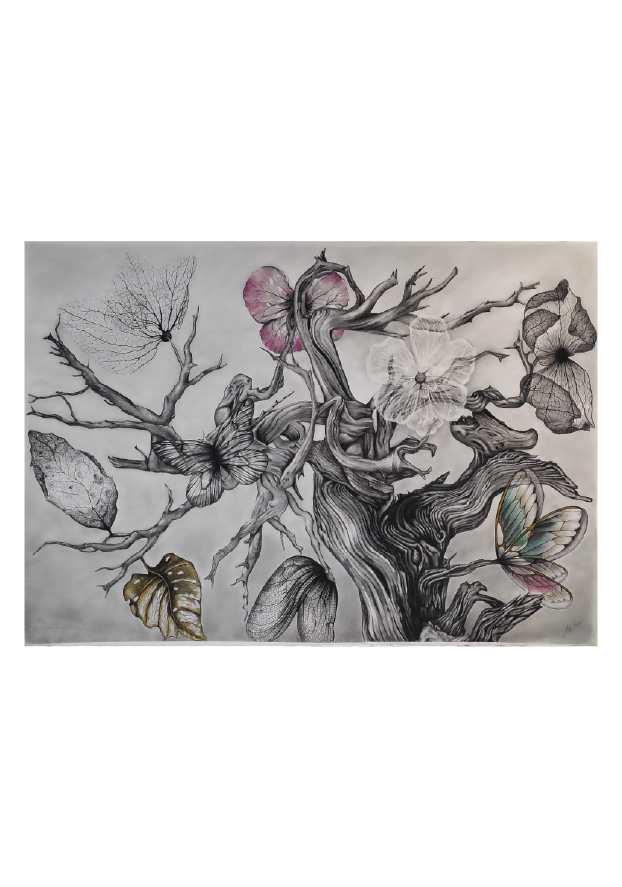
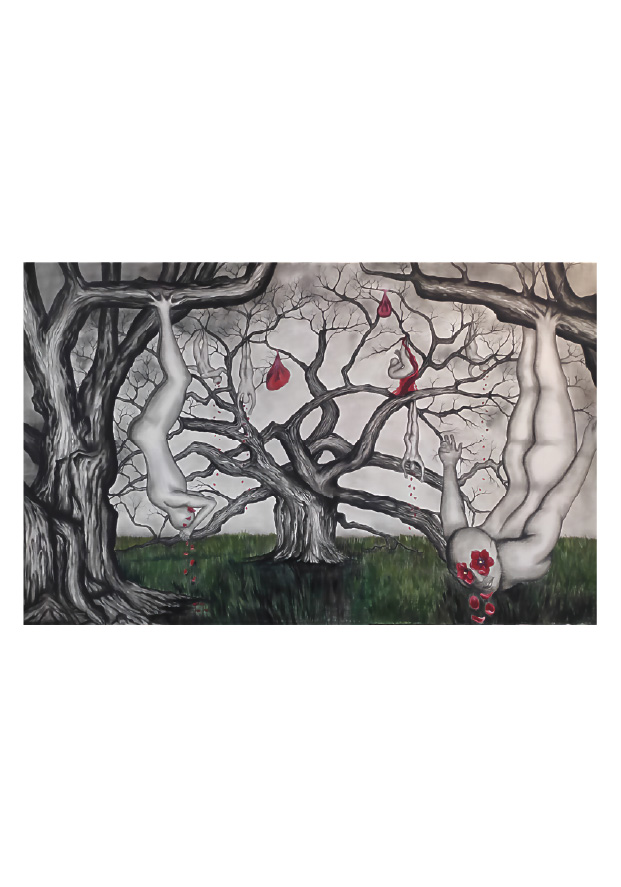
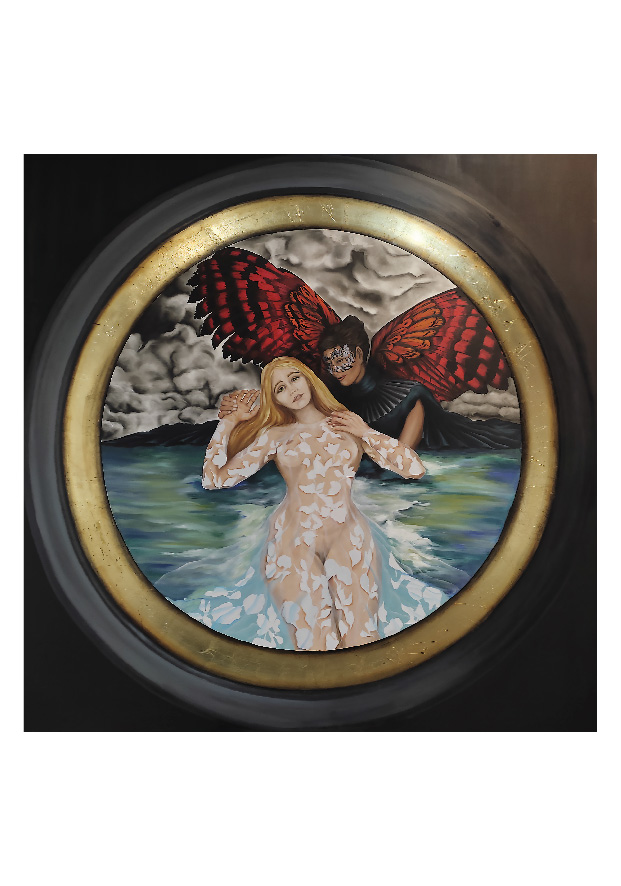
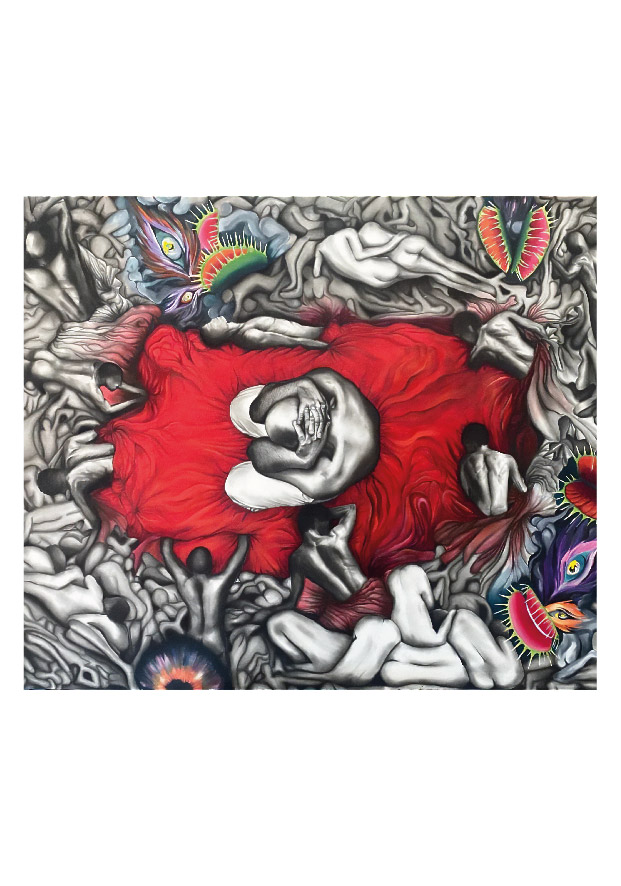
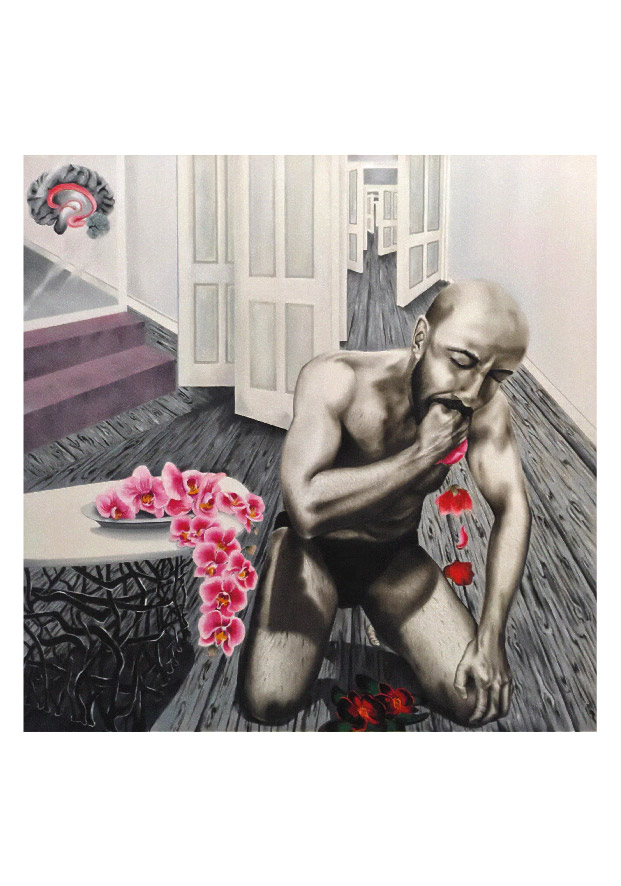
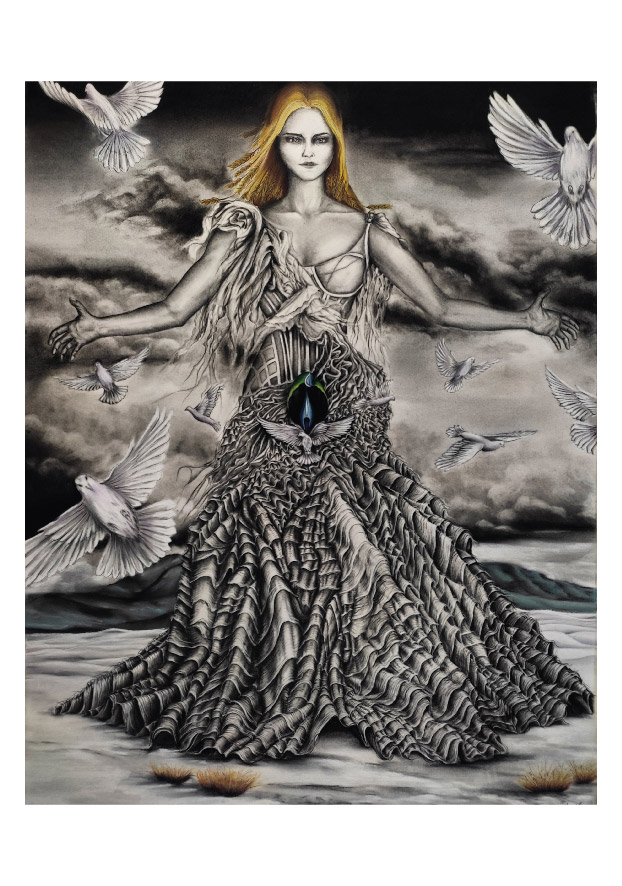
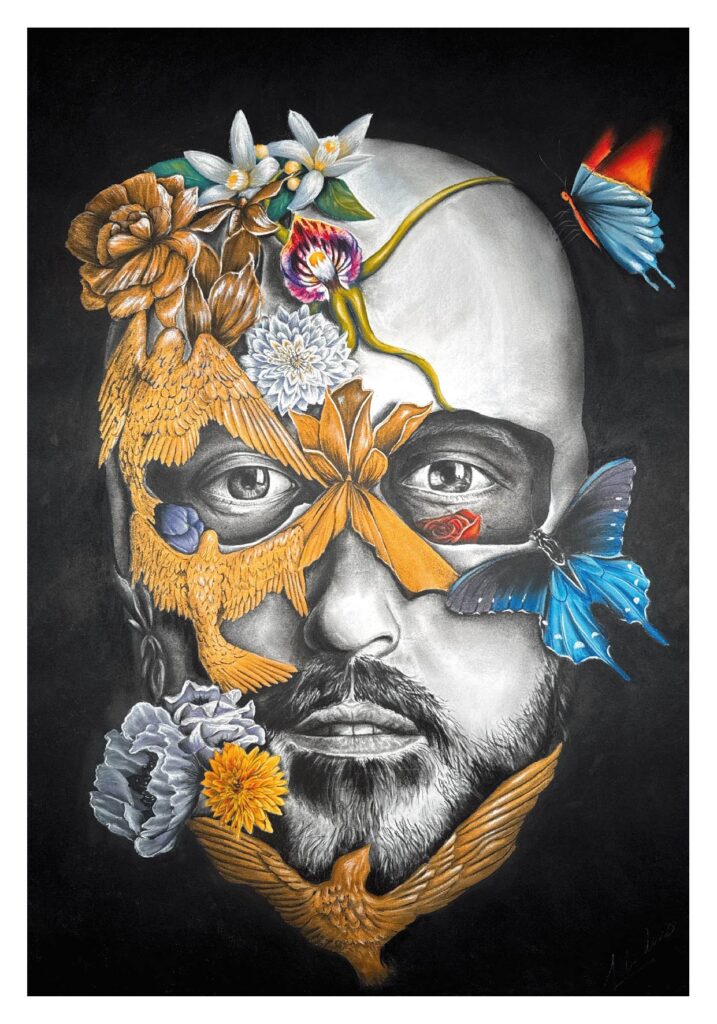
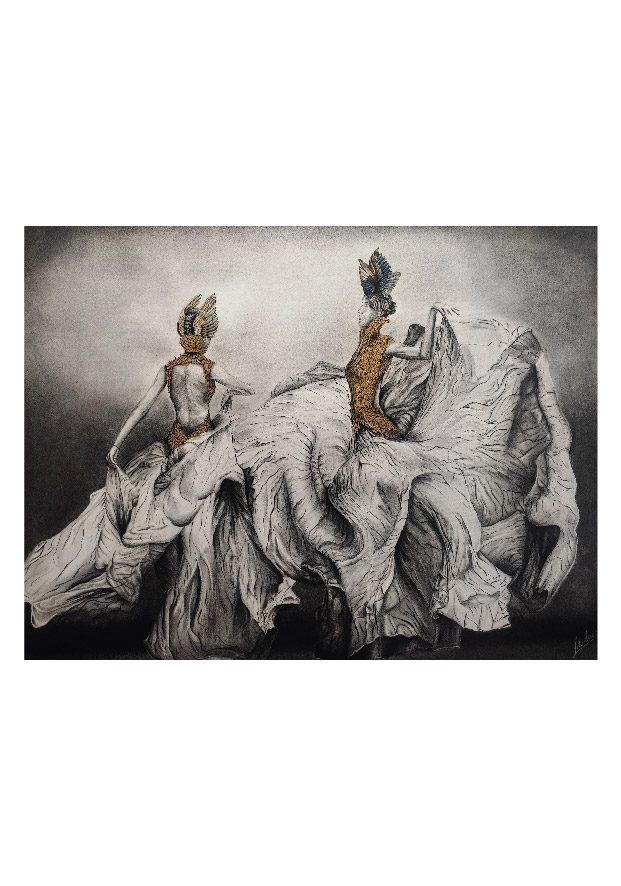
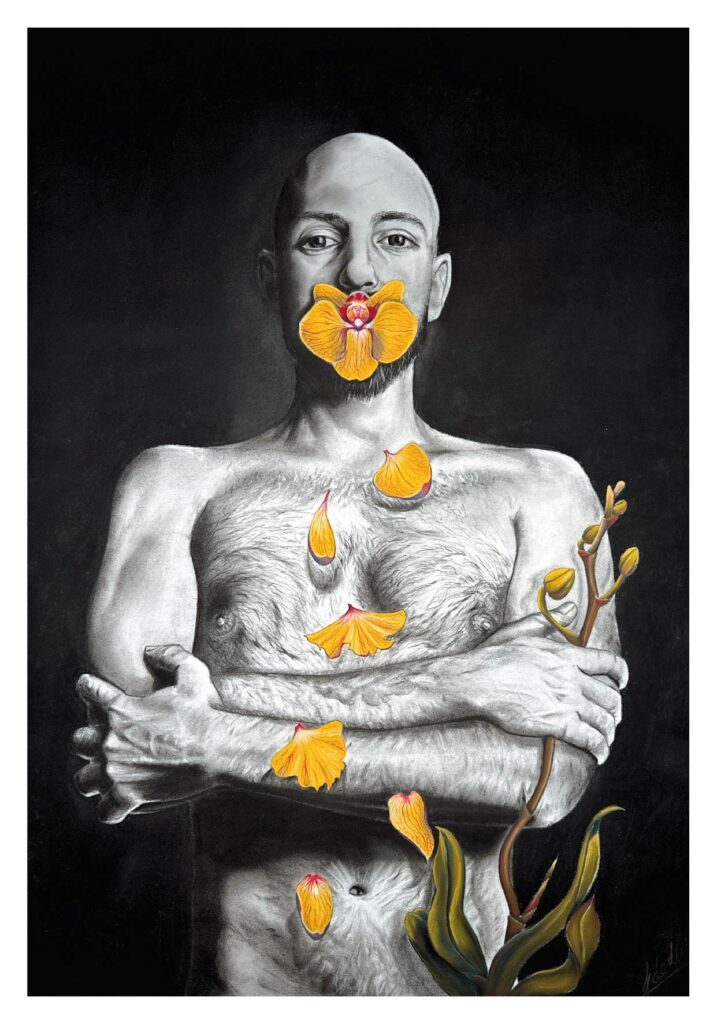
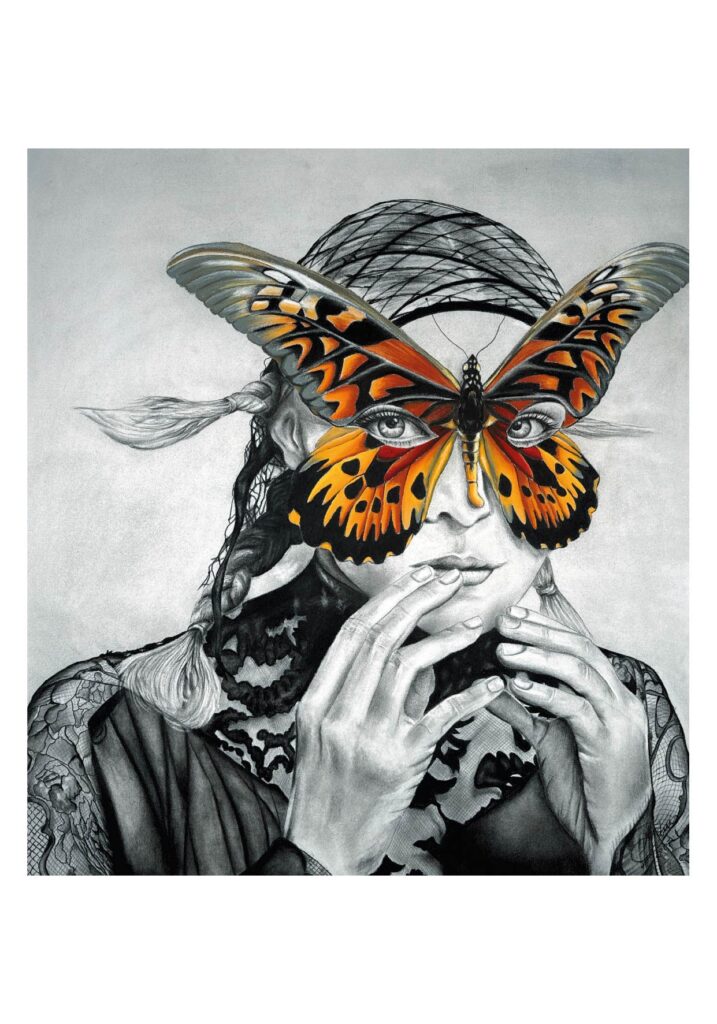
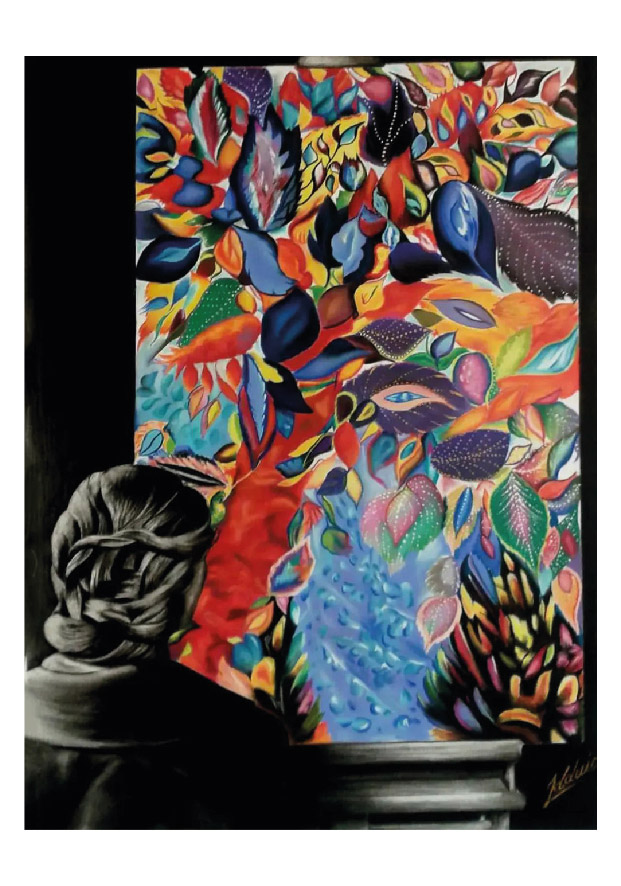
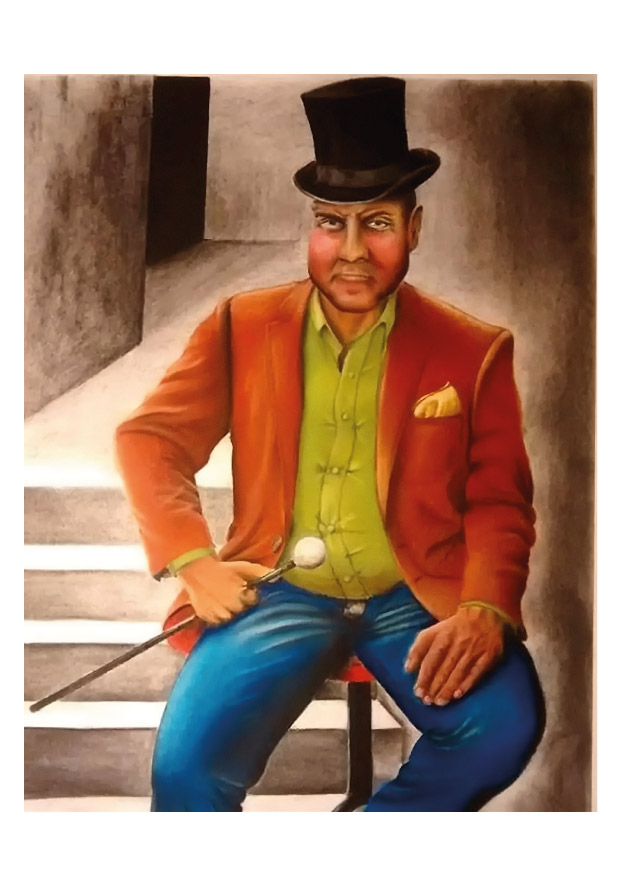
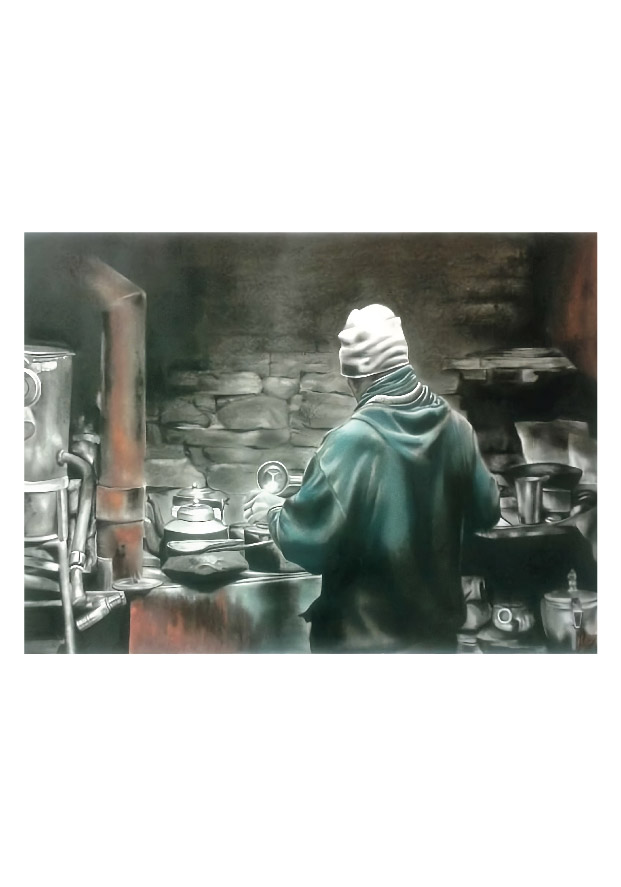
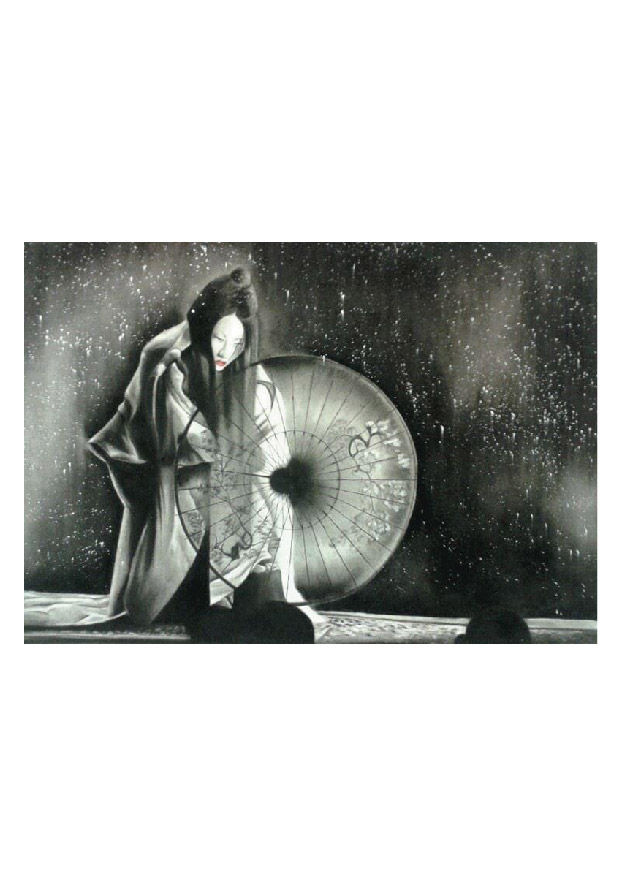
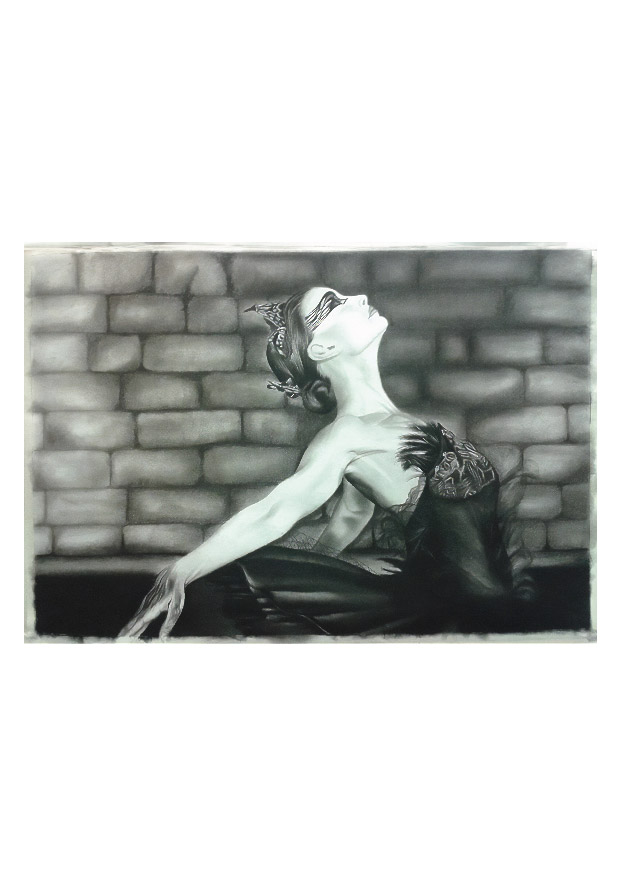
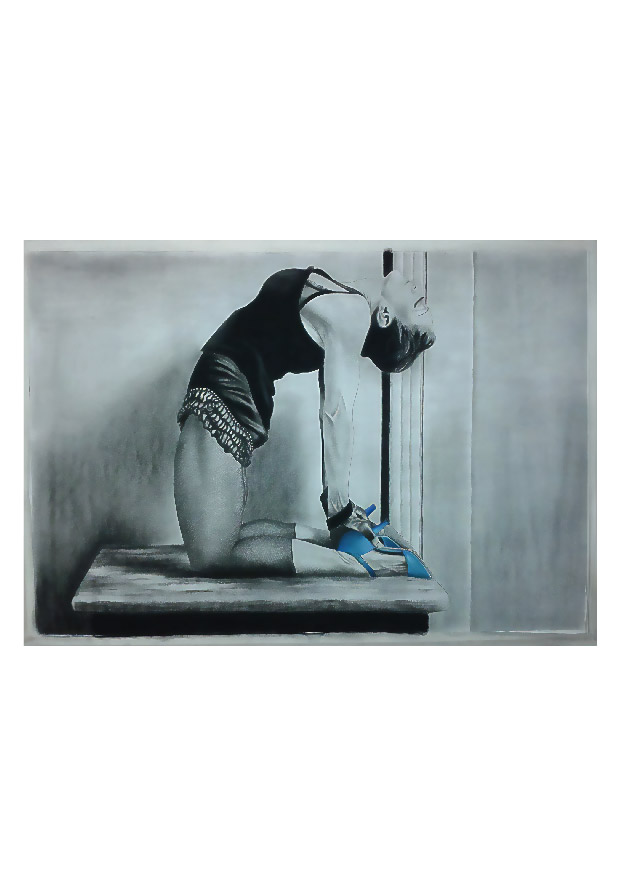
Oxymoron is the contrast, the mixture of the most visceral and darkest emotions united with the most purely beautiful elements, leading to something unique, impossible to contemplate indifferently. Jorge de Luis captures this union of light and shadow in each of the works that make up this collection, all of which are on paper and canvas.
To explain Oxymoron, Jorge de Luis refers to one of the artists who has most influenced his conception of art, the designer Alexander McQueen, who defines his creations as a way of transforming the unpleasant into the beautiful and the beautiful into something never seen before. Thus, De Luis captures violence and beauty in his paintings, seeking balance and contrast at the same time. To do so, he resorts to combinations of black and white with bright colours, surrealist themes where the dreamlike and the real, death and life, self-destruction and overcoming, the disturbing and introspective with the naïve and optimistic.
Artists such as Madonna, Seraphine or Steven Klein are Jorge de Luis’ inspiration for the first pieces of the Oxímoron collection, which consist of reproductions of photographs and film stills. Each painting has a special meaning and expresses his admiration for these artists through imitation. The elements he uses as a starting point are pop culture, music, cinema, fashion and photography, and then he goes further, investigating and searching for concepts full of symbolism with a common thread. In the most recent works, however, the author feels a special attraction for the work of surrealist and contemporary women painters, from the Generation of ‘27 and Las Sinsombrero to Leonora Carrington, Remedios Varo, Georgia Okeffe or Dorothea Tanning, as well as Tamara di Lempicka, Frida Kahlo and Seraphine, which inevitably influences his latest creations.
Nor can the enormous prominence of women in Jorge de Luis’s works be overlooked. The feminine takes centre stage in every scene, either through the representation of the woman in the painting or through symbols of the feminine, which are present in animals, such as the butterfly, or the flowers that appear in every painting as a recurring element. The woman in De Luis’s work is the centre, the transforming element, always represented from an empowering perspective of the feminine.
All of this makes Oxímoron the point of union between internal inspiration, the fruit of personal sensations and experiences, and external inspiration, received through other forms of art.